

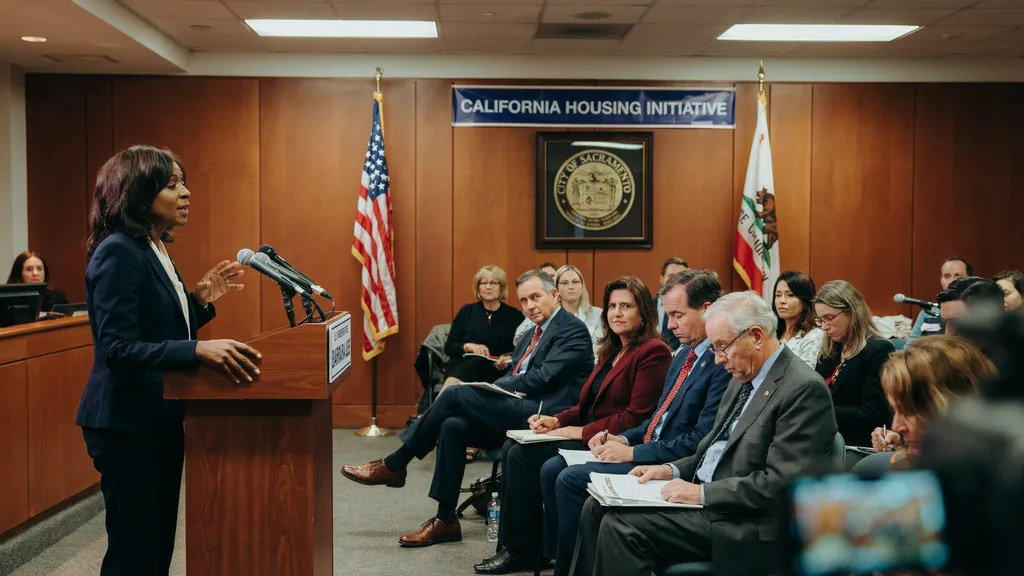
In late March 2026, a bipartisan coalition of mayors from California’s 13 largest cities traveled to Sacramento to press state leaders to restore and sustain funding for the Homeless Housing, Assistance and Prevention (HHAP) program.
The program is set to drop to $500 million in the 2026–27 fiscal year—about half its previous level of roughly $1 billion annually. The mayors warned that the reduction could significantly weaken local efforts to address homelessness.
Led by Riverside Mayor Patricia Lock Dawson, the delegation included Kevin McCarty (Sacramento), Todd Gloria (San Diego), Ashleigh Aitken (Anaheim), Barbara Lee (Oakland), Christina Fugazi (Stockton), Matt Mahan (San Jose), Rex Richardson (Long Beach), and Larry Agran (Irvine), among others. They urged state officials in both the Legislature and the executive branch to restore HHAP funding to $1 billion annually and make that commitment permanent.
State data show a 9% decline in unsheltered homelessness in 2025, a figure Governor Gavin Newsom has pointed to as evidence of progress. However, mayors argued that cutting funding now could jeopardize those gains.
“These cuts put critical programs and real progress at risk, sending a message that reducing homelessness is no longer a priority for the state,” Lock Dawson said. She warned that without legislative action, the 13 cities could lose funding equivalent to 6,000 shelter beds, putting roughly 41,000 people at risk of returning to homelessness. “HHAP works, and it’s been working,” she said.
Mayors described ongoing pressures in their cities, noting that homelessness is driven by rising rents, income instability, evictions, and behavioral health challenges.
While overall unsheltered homelessness has declined, racial disparities remain significant, particularly in Black communities across major cities. In Oakland, for example, Black or African American residents make up about 22% of the population but account for more than half of the city’s homeless population and an even higher share of those who are unsheltered or newly homeless.
In August 2025, Oakland launched the Office of Homelessness Solutions to coordinate services across departments, including encampment response, emergency shelter, and permanent housing efforts.
Mayor Barbara Lee, elected in a special election in April 2025, said a 50% reduction in state funding could sharply limit the city’s progress over the next five years. She emphasized that addressing homelessness requires a consistent racial equity approach across all levels of government.