

For many shoppers, buying eggs is a simple task.
You walk into the grocery store, grab a carton from the shelf, check the expiration date, and move on.
But according to food experts, there is much more information hidden on an egg carton than most people realize.
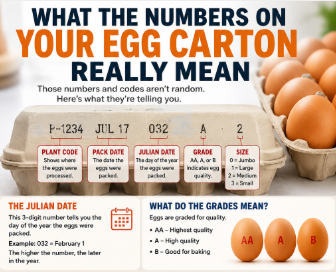
Those numbers, letters, and labels printed on the package can tell you when the eggs were packed, how they were produced, and even provide clues about freshness.
Understanding what these markings mean can help consumers make more informed decisions the next time they shop.
Why Egg Cartons Include So Many Numbers
Food packaging is designed to provide important information about the products we consume.
Egg cartons are no exception.
While most people focus only on the “best by” date, cartons often contain additional codes that help retailers, producers, and consumers track the product throughout the supply chain.
These markings can offer valuable insight into freshness and production practices.
What Is the Julian Date?
One of the most confusing numbers found on many egg cartons is a three-digit code known as the Julian date.
This number represents the day of the year when the eggs were packed.
For example:
- 001 = January 1
- 032 = February 1
- 100 = April 10
- 365 = December 31
The closer the packing date is to the purchase date, the fresher the eggs are likely to be.
Many consumers are surprised to learn that this code can often provide a more accurate freshness indicator than the expiration date alone.
Understanding the Plant Code
Most egg cartons also include a plant identification code.
This code identifies the facility where the eggs were processed and packaged.
Government agencies use these codes to track products if safety concerns or recalls occur.
While the code may not matter much to everyday shoppers, it plays an important role in food safety and quality control.
What Labels Like “Cage-Free” and “Free-Range” Mean
Another source of confusion comes from marketing labels.
Terms such as:
- Cage-Free
- Free-Range
- Organic
- Pasture-Raised
are often misunderstood.
Although these labels sound similar, they describe different farming practices.
For example, cage-free hens are not kept in cages but may still live indoors.
Free-range hens are generally provided access to outdoor areas.
Organic eggs must meet additional requirements regarding feed and farming standards.
Consumers interested in animal welfare often pay close attention to these distinctions when shopping.
Does Egg Color Matter?
One of the most common myths about eggs involves shell color.
Many people assume brown eggs are healthier than white eggs.
According to agricultural experts, shell color has very little to do with nutritional value.
The color of an egg is determined primarily by the breed of the hen.
Both brown and white eggs can provide similar amounts of protein, vitamins, and minerals.
How to Tell if Eggs Are Still Fresh
Even after checking carton dates, some consumers like to verify freshness at home.
A popular method is the water test.
Fresh eggs typically sink and lie flat in a bowl of water.
Older eggs may stand upright or float because the air pocket inside grows larger over time.
While this test is not perfect, it can provide a general indication of freshness.
Why Understanding Labels Matters
Learning how to read an egg carton allows consumers to make smarter purchasing decisions.
Instead of relying solely on marketing claims or expiration dates, shoppers can better understand:
- Freshness
- Production methods
- Processing information
- Farming standards
These details can help people choose products that align with their preferences and priorities.
The Bottom Line
The next time you buy eggs, take a closer look at the carton before placing it in your shopping cart.
Those small numbers and codes are not there by accident.
They provide useful information about when the eggs were packed, where they came from, and how they were produced.
Once you know what those markings mean, you may never look at an egg carton the same way again.
Meta Title
Meta Description
Most shoppers overlook the numbers printed on egg cartons. Learn what these codes reveal about freshness, packaging dates, and egg production standards.