

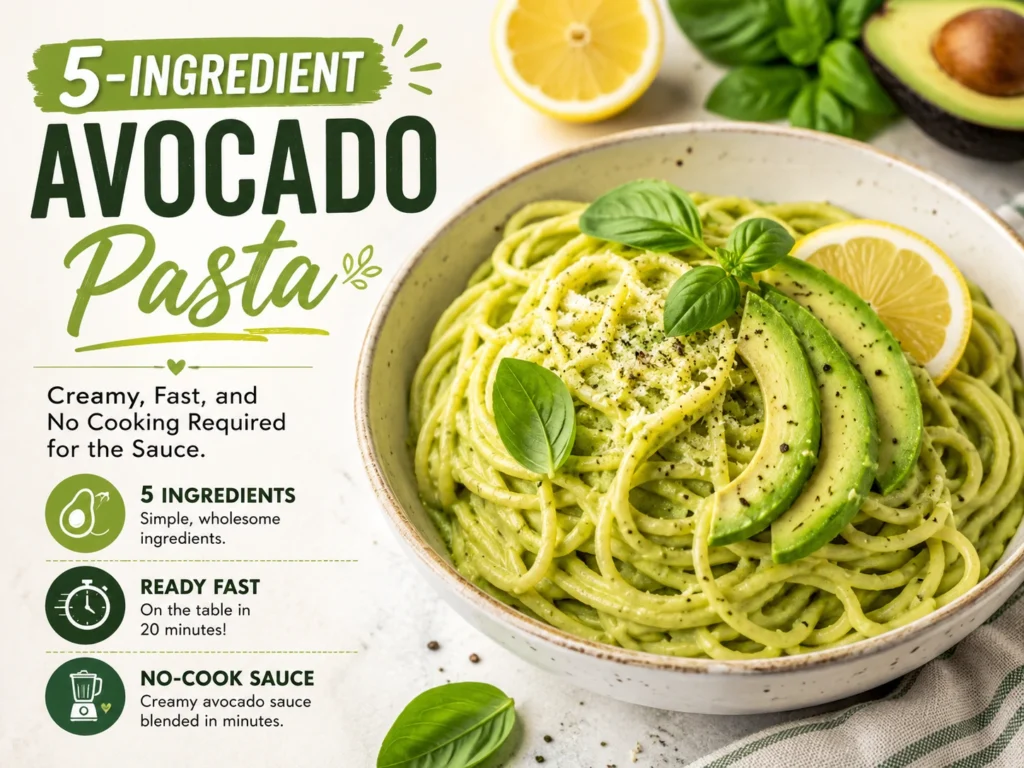
5-Ingredient Avocado Pasta — Creamy, Fast, and No Cooking Required for the Sauce
Avocado pasta is one of those recipes that seems like it should not work as well as it does. The sauce is made in a blender while the pasta cooks — about 5 minutes of actual work — and the result is a creamy, rich-tasting pasta that satisfies the same way a heavy cream sauce does, without the heaviness or the extra 20 minutes of cooking.
Why Avocado Works as a Pasta Sauce
Ripe avocado blended with olive oil, lemon, and garlic creates an emulsified, creamy sauce that clings to pasta the same way an oil-based sauce does. The fat in the avocado provides richness and mouthfeel that feels indulgent without actually being heavy. It is also naturally high in fiber, potassium, and healthy monounsaturated fat — which makes it one of the more nutritionally dense pasta sauce options available.
The critical factor is using a genuinely ripe avocado. An underripe avocado will be watery and slightly bitter. A perfectly ripe one — dark skin, yields to gentle pressure — blends into something silky and mild.
Ingredients — Serves 2 to 3
- 8 oz (225g) pasta — spaghetti, linguine, or penne all work well
- 2 ripe avocados, pitted and scooped
- 2 tablespoons olive oil
- 2 tablespoons fresh lemon juice (about 1 lemon)
- 2 garlic cloves, roughly chopped
- Salt and black pepper to taste
- Pasta cooking water as needed
Optional additions that work well: cherry tomatoes halved, fresh basil, red chili flakes, toasted pine nuts, shaved Parmesan, or a fried egg on top.
Instructions
Step 1 — Cook the Pasta
Bring a large pot of generously salted water to boil. Cook pasta according to package instructions until al dente — it should have a slight bite, not be completely soft. Before draining, reserve about 1 cup of the starchy pasta cooking water. Drain and set aside.
Step 2 — Make the Avocado Sauce
While the pasta cooks, add avocado flesh, olive oil, lemon juice, garlic, salt, and pepper to a blender or food processor. Blend until completely smooth, about 30 to 45 seconds. Add 2 to 3 tablespoons of the hot pasta cooking water and blend again — this loosens the sauce and helps it emulsify and cling to the pasta. Taste and adjust salt, lemon, or garlic.
Step 3 — Combine
Add the drained pasta to a large bowl or directly back to the warm (off-heat) cooking pot. Add the avocado sauce and toss immediately — the residual heat from the pasta warms the sauce gently. Add more pasta water a tablespoon at a time until the sauce reaches your preferred consistency. It should coat each piece of pasta evenly without being watery.
Step 4 — Serve Immediately
Avocado sauce oxidizes and turns brown within 15 to 20 minutes, so serve this dish right away. Add any toppings and serve with extra lemon on the side. This is not a good make-ahead dish — it is best eaten within minutes of being made.
Variations
- Spicy version: Add 1/4 to 1/2 teaspoon of red pepper flakes to the blender
- More herb-forward: Add a large handful of fresh basil or cilantro to the blender
- Richer: Add 2 tablespoons of Greek yogurt or sour cream to the blender for extra creaminess
- With protein: Top with grilled chicken, shrimp, or a soft-boiled egg
Frequently Asked Questions
Can I make avocado pasta sauce ahead of time?
Not really — avocado oxidizes quickly and the sauce turns brown and develops a slightly off flavor within 15 to 30 minutes of exposure to air. The pasta and sauce are best made simultaneously and eaten immediately. If you need to briefly hold the sauce, press plastic wrap directly onto the surface to minimize air contact.
What pasta shape works best with avocado sauce?
Long, thin pasta like spaghetti or linguine works best because the smooth sauce coats each strand evenly. Penne and rigatoni also work well. Avoid very delicate pasta shapes or small ones like orzo — the sauce tends to pool rather than coat. The slightly textured surface of bronze-die extruded pasta holds the sauce particularly well if you have that option.
Why should I save pasta cooking water?
Pasta cooking water is starchy and slightly salty, which makes it ideal for thinning and emulsifying pasta sauces. Adding it to the avocado sauce helps it cling to the pasta rather than sitting separately. It also warms the cold sauce slightly as you add it, which helps everything come together. Regular water can work in a pinch, but the starch content of pasta water makes a noticeable difference.