

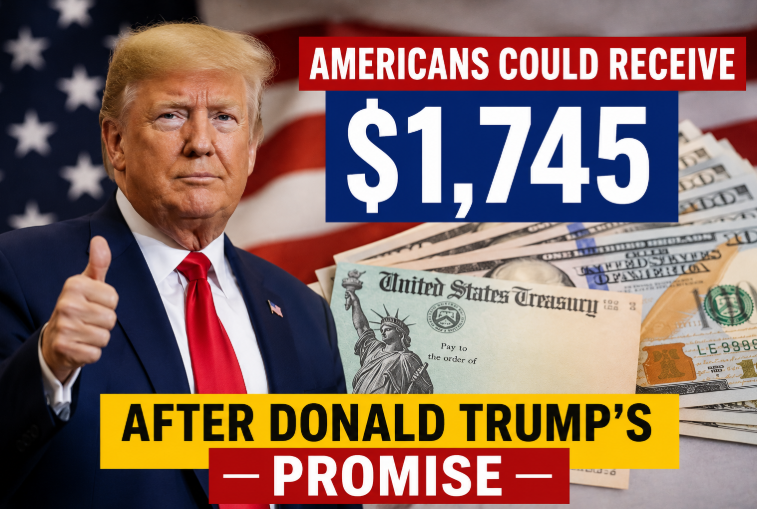
A new wave of online discussion is spreading across social media after reports connected to Donald Trump’s economic promises suggested that some Americans could potentially receive financial relief worth up to $1,745 under certain future proposals.
The topic quickly gained attention on Facebook, TikTok, X, and YouTube, where users debated what the promise could mean for taxpayers, working families, and the broader U.S. economy.
While many people welcomed the possibility of additional financial support, others questioned how realistic the proposal might be and whether similar promises could actually become reality.
As the conversation continues growing online, millions of Americans are searching for answers about where the number came from and what it could potentially mean moving forward.
Why the $1,745 Figure Is Getting Attention
Financial relief discussions always attract major public interest, especially during periods of economic uncertainty, rising living costs, and political tension.
According to recent online reports and political commentary, the figure became associated with broader conversations about tax relief, government spending, and future economic plans connected to Donald Trump’s campaign messaging.
Although exact details continue to vary depending on the source, supporters online described the proposal as part of a larger promise aimed at helping working Americans deal with inflation and household expenses.
The idea spread rapidly because many families across the country are still feeling pressure from:
- higher grocery costs
- housing expenses
- fuel prices
- insurance increases
- general inflation
Any discussion involving possible financial payments or tax relief naturally generates strong engagement online.
Social Media Quickly Amplified the Story
Within hours of the reports circulating, social media users began posting reaction videos, financial breakdowns, and political commentary discussing who might qualify and whether the promise could realistically happen.
Some creators framed the proposal as major economic relief for middle-class households. Others argued that campaign promises involving direct financial benefits often become simplified or exaggerated once they spread online.
The story became especially popular on TikTok and Facebook, where short videos discussing “possible payments” collected millions of views very quickly.
Experts say financial topics consistently perform well online because they affect everyday life directly and immediately.
Supporters Say Economic Relief Is Needed
Many supporters of Trump’s economic messaging argue that American households continue facing financial strain despite improvements in some areas of the economy.
They believe additional tax relief or direct financial support could help families manage rising costs and reduce economic pressure.
Supporters also point to previous stimulus-style programs and tax policies as examples of how government action can quickly impact household finances.
For many voters, economic issues remain one of the most important factors heading into future political discussions and elections.
Critics Question the Details
At the same time, critics have urged caution regarding viral financial claims spreading online.
Some analysts note that headlines discussing possible payments or future financial promises often lack important context, including:
- how programs would be funded
- whether Congress would approve them
- eligibility requirements
- implementation timelines
Financial experts also warn that social media can sometimes oversimplify complex policy discussions into catchy headlines that spread faster than detailed explanations.
That is why many economists encourage people to wait for official policy proposals and verified government information before assuming payments are guaranteed.
Why Financial Stories Go Viral So Easily
Stories involving money, taxes, or direct payments almost always attract massive attention online.
Digital media analysts explain that financial content performs especially well because it creates immediate emotional reactions:
- hope
- curiosity
- frustration
- excitement
- anxiety
When headlines suggest people could receive money or financial benefits, audiences naturally click, share, and discuss the story rapidly.
This is one reason political promises connected to taxes, inflation, or stimulus payments often dominate social media conversations during election cycles.
Economic Anxiety Remains High for Many Americans
Even as inflation has slowed compared to previous peaks, many Americans continue feeling financial pressure in everyday life.
Costs related to:
- groceries
- rent
- healthcare
- transportation
- utilities
remain major concerns for households across the country.
Because of that, political discussions involving financial relief tend to resonate strongly with voters from different backgrounds.
For many families, even the possibility of additional economic support becomes an important topic of interest.
The Bigger Conversation Behind the Headlines
Beyond the viral headlines themselves, the discussion reflects something larger happening across the United States right now.
Economic uncertainty continues shaping political conversations in major ways.
Voters are increasingly focused on:
- affordability
- taxes
- wages
- inflation
- government spending
- household stability
As campaigns continue discussing economic plans and financial promises, stories like this are likely to keep generating major engagement online.
What People Should Keep in Mind
Experts recommend approaching viral financial headlines carefully, especially when exact details remain unclear.
While political promises often generate excitement, actual policy changes typically require:
- legislative approval
- budget planning
- implementation processes
- legal review
That means headlines alone do not necessarily guarantee immediate payments or finalized programs.
Still, the enormous reaction online shows how deeply economic issues continue affecting Americans nationwide.
And in today’s digital environment, even the possibility of financial relief can quickly become one of the internet’s biggest conversations.
FAQ
Could Americans really receive $1,745?
The figure comes from online discussions connected to economic proposals and political promises, though official details may still evolve.
Why did the story go viral?
Financial relief stories attract strong public attention because they directly affect household budgets and daily life.
Are the payments officially confirmed?
People should wait for verified government announcements or official policy proposals before assuming payments are guaranteed.