

California Secretary of State Shirley Weber, the first Black person to hold the office, is seeking a second four-year term after making history with her 2021 appointment.
As the incumbent and the only Democrat in the race, Weber is widely expected to win reelection in November. Her main challenger is Orange County Supervisor Don Wagner, a Republican. No Republican has won a statewide office in California since 2006.
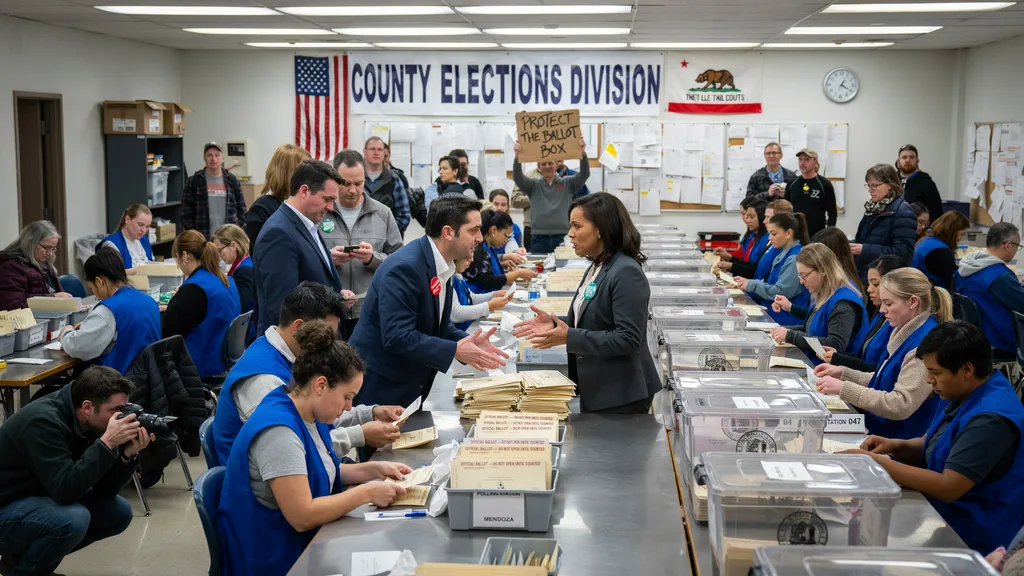
One of the central issues in the race is California’s lengthy ballot-counting process. Under state law, county election officials have up to 30 days to count ballots and complete post-election audits. Critics, including Wagner, argue that the timeline fuels public skepticism about election integrity, especially when winners in some state legislative races are sworn into office before results are officially certified.
In an interview with CalMatters, Weber rejected those concerns, saying they reflect political attacks on California’s election system rather than genuine problems. She emphasized that ensuring every ballot is counted accurately is more important than producing rapid results.
“I know the value of being fast for some folks,” Weber said. “For me, accuracy is far more important.”
Wagner contends that Weber has not done enough to push lawmakers to accelerate the counting process. He also advocates ending California’s policy of mailing ballots to all registered voters, a practice made permanent during the COVID-19 pandemic, though such a change would require legislative approval. Wagner said he would support legislation that shortens the deadline for certifying election results.
“Rather than wait 30 days, let’s make these changes that are right now causing people of all parties and no party to question: ‘Geez, is that really a fair election?’” Wagner said.
A former San Diego assemblymember, Weber was appointed secretary of state by Gov. Gavin Newsom in 2021 and won a full term the following year. The daughter of Arkansas sharecroppers who left the Jim Crow South, she has built her political career around expanding voter access and increasing civic participation.
During her tenure, Weber has overseen several high-profile elections, including the 2021 recall election against Newsom and disputes over congressional redistricting. She says her priorities have included expanding voter outreach in rural communities and encouraging voter registration among high school and college students, efforts she plans to continue if reelected.
Weber has also played a prominent role in defending California’s election laws. She has pursued legal action against local governments accused of violating election rules while also defending the state’s election system against challenges from both Democrats and Republicans. Most recently, she successfully resisted a lawsuit from the Trump administration’s Department of Justice seeking access to California voter registration data.
“We fought to protect Californians’ voting rights,” Weber said. “If we were giving voter information away like candy, who would trust us to protect their records?”
Despite those efforts, Weber has faced criticism from voting-access advocates. In 2024, disability rights groups sued her office over state laws that do not allow voters with disabilities to return ballots electronically. The lawsuit was ultimately unsuccessful, but advocates continue to argue that California should do more to make voting accessible for all residents.
Wagner says his campaign is aimed at offering voters an alternative to Weber, even as he acknowledges that a Republican victory in a statewide California race would be highly unlikely. A former state assemblymember, Wagner argued that if elected, he could use the office’s visibility to influence public debate and pressure the Democratic supermajority in the Legislature.
Among his proposals is requiring voters to present identification at the polls, a change that would require legislative approval. The issue has gained renewed attention after a Republican-backed voter ID initiative qualified for the November ballot.
Wagner said his primary objective is to strengthen public confidence in California’s election system.
“I am not one of those Republicans who is going to be out there telling you that unless a Republican wins, the election got stolen,” Wagner told CalMatters. “What I am saying is I believe folks on either side of the political aisle and in the middle question the integrity.”
He argued that reforms such as voter ID requirements and faster election certification would help reassure voters that elections are being conducted fairly and transparently.