

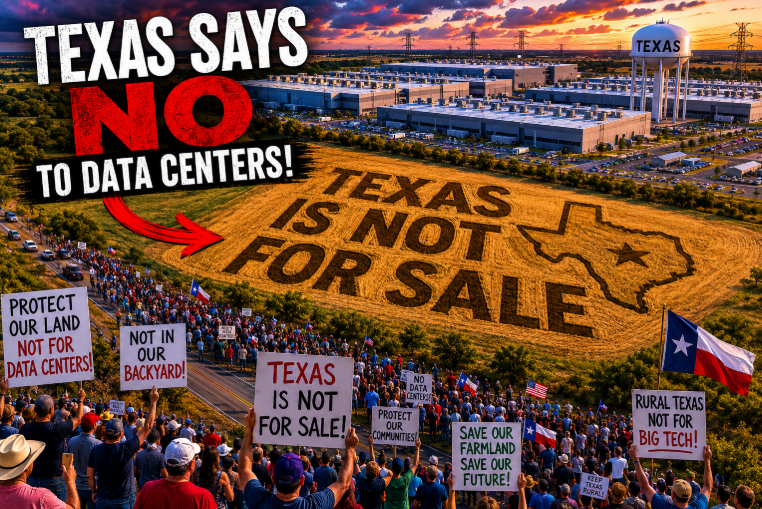
Across several parts of Texas, growing numbers of residents are speaking out against plans to build massive data centers near forests, farmland, quiet lake communities, and rural neighborhoods. What developers describe as “economic growth” is being viewed by many locals as a threat to the landscapes and communities they have spent generations protecting.
As technology companies continue searching for land to expand server infrastructure, Texans in multiple counties are now organizing public meetings, petitions, and community protests to slow or stop large-scale projects they believe could permanently transform rural Texas.
Rural Communities Fear Losing Their Identity
For many residents, the issue goes beyond construction itself. People living near proposed sites say they are worried about losing the peaceful environment that defines small-town life.
Open farmland, scenic backroads, and wooded areas are increasingly being targeted for industrial-scale development. Critics argue that giant warehouse-style server facilities simply do not belong near homes, schools, lakes, or agricultural land.
Some residents say the projects could dramatically change traffic patterns, increase noise levels, and place pressure on local utilities and water supplies.
One local resident described the situation by saying:
“We moved here for the quiet countryside, not to live next to an industrial complex with constant construction and heavy trucks.”
That feeling is now being echoed across multiple Texas communities.
Why Data Centers Are Expanding So Fast
The rapid growth of artificial intelligence, cloud computing, streaming services, and online storage has created massive demand for data centers across the United States.
Texas has become especially attractive to developers because of its large open spaces, business-friendly policies, and growing energy infrastructure. Companies are racing to secure land before competitors move in.
But many local residents argue that the speed of development is leaving communities behind.
Some claim they only learned about proposed projects after deals had already advanced significantly. Others say developers are not being transparent enough about environmental impact, long-term energy use, or changes to surrounding property values.
Environmental Concerns Continue Growing
Environmental groups have also started paying closer attention to these projects.
Data centers consume enormous amounts of electricity and often require significant water resources for cooling systems. In drought-prone regions of Texas, some residents worry that future water demand could become a serious issue.
Others fear large facilities could damage wildlife habitats, increase heat pollution, and permanently alter natural landscapes that have remained untouched for decades.
Farmers in affected areas are especially concerned about losing agricultural land that has supported local economies for generations.
Supporters Say the Projects Bring Jobs
Not everyone opposes the developments.
Supporters argue that data centers bring investment, construction jobs, infrastructure improvements, and new tax revenue to local communities. Some officials believe the projects could help modernize struggling rural economies.
Technology companies also claim the facilities are necessary to support America’s rapidly growing digital economy.
Still, opponents argue that many long-term data center jobs are limited once construction ends, while the environmental and visual impact remains permanent.
A Growing Statewide Debate
The conflict reflects a much larger debate happening across Texas: how to balance economic growth with preserving the character of rural communities.
As cities expand and technology companies continue investing billions into infrastructure, more small towns are finding themselves at the center of major development battles.
For many Texans, the fight is not simply about buildings.
It is about protecting farmland, preserving open landscapes, and deciding what the future of rural Texas should look like before it changes forever.