

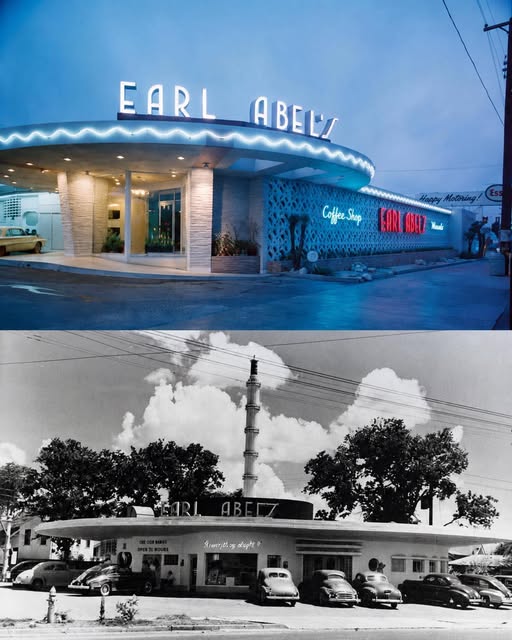
Long before fast food chains dominated American streets, local restaurants were built on stories, struggles, and survival. One of the most unforgettable examples came from San Antonio, Texas, where a silent film organist named Earl Abel accidentally created one of the city’s most beloved dining institutions.
His story feels almost impossible today — a man who once performed alongside entertainment legends like Charlie Chaplin and Bing Crosby suddenly found himself unemployed overnight. But instead of giving up during one of the hardest economic periods in American history, he transformed desperation into something unforgettable.
When Hollywood Changed Everything
During the silent film era, theater organists were stars in their own right. Their live music gave emotion and excitement to movies before sound became standard in cinemas. Earl Abel was one of those talented musicians who built a successful career entertaining audiences across America.
But then Hollywood introduced “talkies” — films with synchronized sound.
Almost instantly, silent film musicians became unnecessary. Thousands lost their jobs as theaters rapidly changed technology. For Earl Abel, the transition was devastating. By 1933, the Great Depression had already crushed the economy, and finding work became nearly impossible.
According to local stories, Abel couldn’t even get hired as an usher in the same theaters where he once performed.
A Restaurant Born From Survival
With little money left, Earl Abel made a decision that would eventually become San Antonio history. He took every dollar he had saved, rented a small house on Main Street, bought cheap plates and silverware from dime stores, and opened a tiny ten-seat restaurant.
His reason was simple.
He once admitted he entered the food business because he needed a way to survive without starving.
What started as pure survival quickly became something much bigger.
The food was simple, comforting, and homemade. Customers loved the warm atmosphere and the honest cooking. Word spread across the city, and soon the tiny restaurant became packed with hungry locals looking for affordable meals during difficult times.
A San Antonio Legend Is Born
As the years passed, Earl Abel’s restaurant became more than just a place to eat. It became part of the identity of San Antonio itself.
At its peak, the business expanded into six different locations across the city. But when World War II created labor shortages, Abel decided to focus on keeping only his strongest location alive — the famous corner of Broadway and Hildebrand.
That location eventually became legendary.
Generations of families gathered there for Sunday dinners, late-night conversations, celebrations, and first dates. Politicians, military officers from Fort Sam Houston, tourists, and celebrities all passed through its doors over the decades.
Even history brushed past the restaurant. In 1961, President John F. Kennedy’s motorcade was photographed driving directly in front of the building during his Texas visit.
Famous Food and Unforgettable Memories
Locals often described the restaurant’s fried chicken as some of the best in Texas. The towering pies became iconic, and the friendly atmosphere made people feel at home no matter where they came from.
One sign inside the restaurant perfectly captured its personality:
“Eat here and diet home.”
That humor, warmth, and sense of community became part of why people loved the place for so many years.
Stories from the restaurant became part of San Antonio folklore. In one unforgettable moment from 1986, a sitting congressman reportedly punched a man inside the dining room after being called a communist during a heated political argument.
Few restaurants carry that kind of history within their walls.
The End of an Era
After serving generations of Texans for nearly ninety years, the final Earl Abel’s location closed in 2023.
For many residents, it felt like the end of a chapter in San Antonio history.
What began with a broke musician trying to survive the Great Depression became one of the city’s most iconic restaurants — all because one man refused to give up after losing everything.
Earl Abel may have started as a silent film organist, but his greatest performance ended up happening far away from Hollywood, inside a small restaurant filled with dime store plates and an enormous amount of heart.